Venture Capital: A Guide for Startup Founders

Introduction
Understanding venture capital basics is essential for startup founders seeking external funding to scale their businesses. Venture capital (VC) funding can accelerate growth, provide strategic guidance, and open doors to valuable networks. However, navigating the venture capital landscape requires familiarity with key concepts and terminology.This guide covers 15 crucial venture capital concepts that every entrepreneur should understand before approaching investors.
1. Venture Capital (VC)
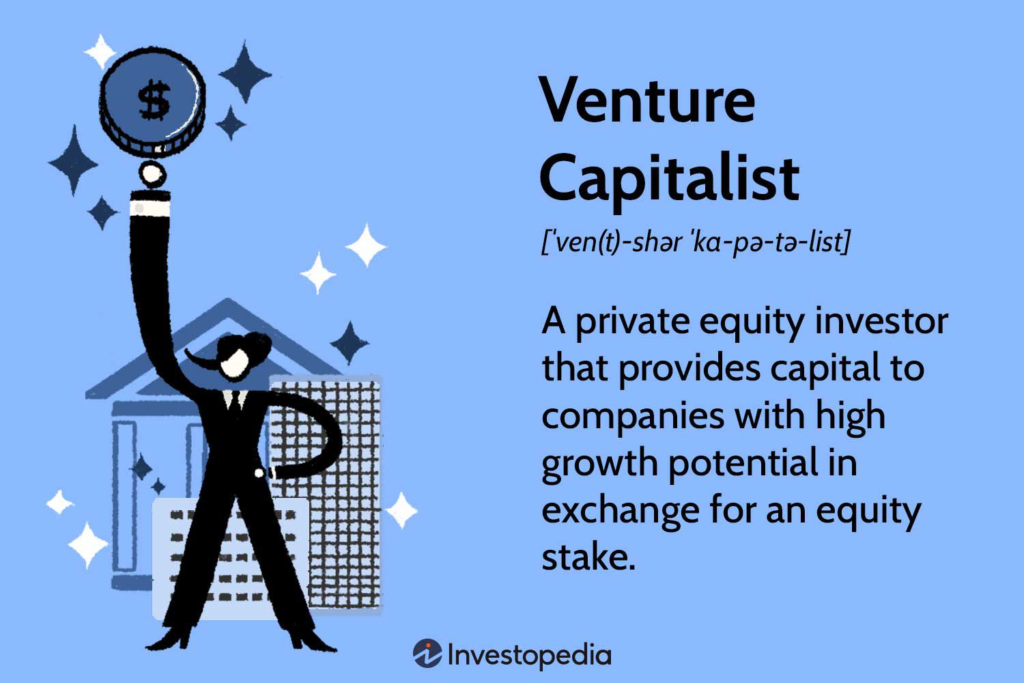
Venture capital is a form of private equity financing provided to startups and early-stage companies with high growth potential
. Venture capital firms invest in exchange for equity ownership and typically seek substantial returns through future exits.
Why It Matters
Understanding how venture capital works helps founders align their fundraising strategy with investor expectations.
2. Startup Valuation
Valuation refers to the estimated worth of a startup at a specific point in time. It determines how much equity founders must give up in exchange for investment.
Types of Valuation
- Pre-money valuation
- Post-money valuation
A higher valuation allows founders to raise capital while retaining more ownership.
3. Equity
Equity represents ownership in a company. When startups raise venture capital, they typically exchange a percentage of equity for funding.
Key Consideration
Founders should carefully manage equity distribution to maintain sufficient ownership and control.
4. Term Sheet
A term sheet is a non-binding document outlining the key terms and conditions of an investment.
Common elements include:
- Valuation
- Investment amount
- Board structure
- Liquidation preferences
- Investor rights
Reviewing a term sheet thoroughly is critical before signing any agreement.
5. Due Diligence
Due diligence is the investigation investors conduct before finalizing an investment.
Areas Examined
- Financial records
- Market opportunity
- Business model
- Intellectual property
- Legal compliance
Strong preparation can significantly improve fundraising success.
6. Dilution
Dilution occurs when new shares are issued, reducing existing shareholders’ ownership percentages.
Example
If a founder owns 100% of a company and sells 20% to investors, the founder’s ownership becomes 80%.
Managing dilution is a crucial aspect of long-term startup planning.
7. Cap Table (Capitalization Table)
A cap table is a document that shows company ownership, including founders, employees, and investors.
A well-maintained cap table helps:
- Track ownership percentages
- Manage future funding rounds
- Evaluate dilution impact
8. Seed Funding
Seed funding is typically the first institutional investment a startup receives.
Purpose
Seed capital is often used for:
- Product development
- Market research
- Team building
- Customer acquisition
This stage helps validate business ideas before larger funding rounds.
9. Series A Funding
Series A funding usually follows seed funding and focuses on scaling proven business models.
Investors expect:
- Product-market fit
- Revenue growth
- Clear expansion plans
Series A often represents a significant milestone for startups.
10. Burn Rate
Burn rate measures how quickly a startup spends its available cash.
Types
- Gross Burn Rate
- Net Burn Rate
Monitoring burn rate helps founders understand how long their company can operate before needing additional funding.
11. Runway
Runway refers to the amount of time a startup can continue operating before running out of cash.
Formula
Runway = Available Cash ÷ Monthly Burn Rate
Maintaining a healthy runway is critical for fundraising flexibility.
12. Liquidation Preference
Liquidation preference determines how proceeds are distributed during an acquisition, merger, or company closure.
This provision often protects investors by ensuring they receive their investment back before common shareholders.
Founders should carefully review liquidation preference terms during negotiations.
13. Board of Directors
The board of directors provides strategic oversight and governance.
A typical startup board may include:
- Founders
- Venture capital investors
- Independent directors
Board composition can significantly influence company decisions and growth strategy.
14. Exit Strategy
An exit strategy is how investors realize returns on their investment.
Common exit options include:
- Initial Public Offering (IPO)
- Acquisition
- Merger
- Secondary sale
Investors evaluate potential exit opportunities before investing.
15. Unicorn Startup
A unicorn startup is a privately held company valued at over $1 billion.
Examples of successful unicorns have inspired many entrepreneurs, but achieving unicorn status requires exceptional growth, market demand, and execution.
Best Practices for Startup Founders Seeking Venture Capital
To improve fundraising success:
- Understand venture capital terminology.
- Maintain accurate financial records.
- Build a scalable business model.
- Prepare a compelling pitch deck.
- Demonstrate market traction.
- Manage cash flow effectively.
- Develop relationships with investors early.
Conclusion
Mastering venture capital basics can significantly improve a founder’s ability to secure funding and build a successful startup. By understanding concepts such as valuation, dilution, term sheets, burn rate, and exit strategies, entrepreneurs can make informed decisions and negotiate confidently with investors.
Whether you’re preparing for your first fundraising round or planning long-term growth, these 15 crucial venture capital concepts provide a strong foundation for navigating the startup investment landscape.












Post Comment