Quartz Events Sponsor Matching Companies Solutions: Best Practices for Successful Partnerships
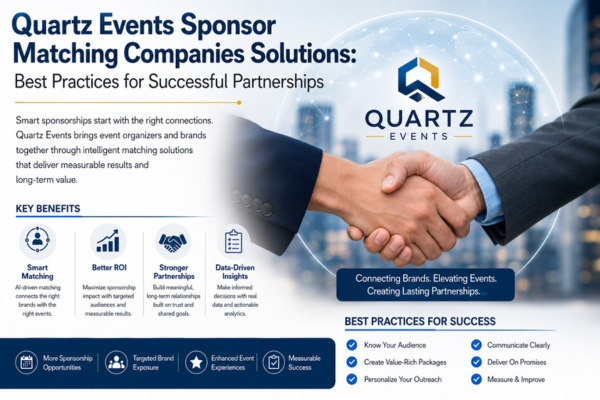
Event sponsorship is one of the best ways for businesses to grow brand awareness.
It also helps them reach target audiences and meet measurable marketing goals. At the same time, event organizers rely on sponsorships to secure funding, enhance attendee experiences, and deliver memorable events.
However, finding the right sponsor has traditionally been a time-consuming and challenging process. Cold outreach, manual research, and mismatched partnerships often lead to disappointing results. Quartz Events Sponsor Matching Companies Solutions help connect organizers and brands. They make sponsorship discovery faster, data-driven, and beneficial for both.
In this guide, we’ll cover best practices for building strong sponsorship partnerships. We’ll also explain how sponsor matching tools are changing the event industry.
Read more dailywordmagazine.com
What Are Quartz Events Sponsor Matching Companies Solutions?
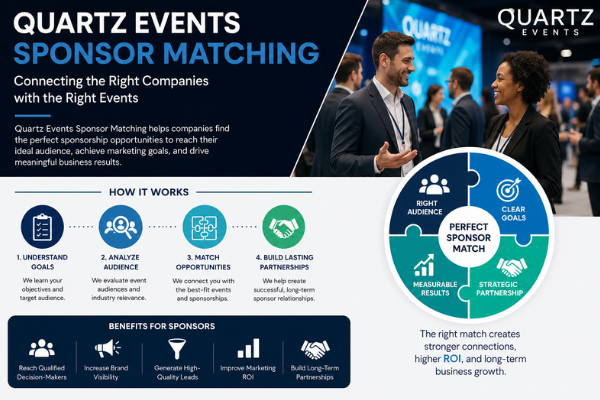
Quartz Events Sponsor Matching Companies Solutions refer to modern sponsorship matching platforms and strategies that connect event organizers with companies whose marketing objectives align with specific events.
Instead of relying on manual networking or generic sponsorship proposals, these solutions use business information, audience insights, industry categories, geographic targeting, and marketing goals to identify compatible sponsorship opportunities.
The result is a more efficient process where both organizers and sponsors benefit from stronger partnerships and improved return on investment.
Why Sponsor Matching Matters
A sponsorship succeeds only when both parties achieve their objectives.
For event organizers, this means securing financial support while partnering with brands that add value to attendees.
For sponsors, success means reaching the right audience, generating qualified leads, increasing brand visibility, and strengthening customer relationships.
Without proper matching, sponsors may invest in events that don’t fit their target audience, while organizers may spend months pursuing companies that have little interest in sponsoring.
Sponsor matching solutions eliminate much of this uncertainty by focusing on compatibility instead of guesswork.
Benefits for Event Organizers
Faster Sponsor Discovery
Finding potential sponsors manually often takes weeks of research.
Sponsor matching solutions automate this process by identifying businesses that match the event’s industry, audience demographics, and sponsorship objectives.
This allows organizers to spend more time building relationships instead of searching for prospects.
Higher Sponsorship Revenue
When sponsorship opportunities are presented to companies that genuinely fit the event, conversion rates naturally improve.
Relevant sponsorship packages attract higher-value sponsors willing to invest more because they see clear marketing potential.
Better Brand Alignment
Attendees notice when sponsors genuinely complement an event.
A technology conference partnered with innovative software companies feels authentic, while unrelated sponsors may appear disconnected.
Strong brand alignment enhances attendee trust and improves the overall event experience.
Benefits for Sponsors
Companies also gain significant advantages through sponsor matching platforms.
Targeted Marketing
Rather than sponsoring random events, businesses can focus on audiences that closely match their ideal customers.
This improves campaign performance while reducing wasted marketing spend.
Improved Return on Investment
Data-driven sponsorship decisions help companies invest in opportunities with greater potential for measurable results.
Sponsors can evaluate audience demographics, attendee engagement, expected reach, and previous event performance before making commitments.
Long-Term Partnerships
Many successful sponsorship relationships continue for years.
When both organizer and sponsor benefit from the collaboration, future partnerships become easier to establish.
Best Practices for Successful Sponsorship Partnerships
1. Understand Your Audience
Every successful sponsorship begins with understanding the audience.
Organizers should collect detailed information such as:
- Age groups
- Professional industries
- Geographic locations
- Purchasing behavior
- Interests
- Attendance history
The more detailed the audience profile, the easier it becomes to identify ideal sponsors.
2. Create Attractive Sponsorship Packages
Avoid offering only logo placement.
Modern sponsors expect meaningful engagement opportunities such as:
- Speaking sessions
- Product demonstrations
- Interactive booths
- VIP networking access
- Social media promotion
- Email marketing inclusion
- Video sponsorship
- Branded attendee experiences
Customized sponsorship packages generate significantly more interest than one-size-fits-all options.
3. Personalize Sponsor Outreach
Generic sponsorship emails rarely succeed.
Instead, demonstrate why your event specifically matches the company’s objectives.
Include information about:
- Audience demographics
- Expected attendance
- Marketing exposure
- Previous sponsor success
- Partnership opportunities
Personalization increases response rates and builds credibility.
4. Use Data to Make Decisions
Modern sponsor matching relies heavily on analytics.
Track metrics such as:
- Website traffic
- Registration trends
- Social media engagement
- Audience demographics
- Event attendance
- Lead generation
- Sponsor satisfaction
These insights help improve future sponsorship campaigns.
5. Set Clear Expectations
Before signing agreements, define:
- Sponsorship benefits
- Marketing deliverables
- Payment schedules
- Branding guidelines
- Reporting expectations
- Performance metrics
Clear communication reduces misunderstandings and builds stronger partnerships.
Technology Is Changing Sponsorship Matching
Artificial intelligence and data analytics have transformed sponsorship management.
Modern platforms analyze thousands of businesses and events simultaneously, identifying potential matches based on multiple criteria.
Some systems evaluate:
- Industry compatibility
- Target audience overlap
- Marketing objectives
- Budget requirements
- Geographic preferences
- Previous sponsorship history
Automation significantly reduces manual research while improving matching accuracy.
Measuring Sponsorship Success
Successful partnerships require measurable outcomes.
Key performance indicators include:
Brand Awareness
Measure:
- Social media impressions
- Website visits
- Brand mentions
- Media coverage
Lead Generation
Sponsors should track:
- New customer inquiries
- Email sign-ups
- Product demonstrations
- Qualified leads
Audience Engagement
Important engagement metrics include:
- Booth visits
- Session attendance
- QR code scans
- Mobile app interactions
- Contest participation
Financial Performance
Organizers should evaluate:
- Sponsorship revenue
- Renewal rates
- Sponsor retention
- Cost savings
Common Mistakes to Avoid
Choosing Sponsors Based Only on Budget
The highest-paying sponsor isn’t always the best fit.
Audience relevance should remain the top priority.
Overpromising Benefits
Never promise unrealistic exposure or guaranteed sales.
Transparency builds long-term trust.
Ignoring Sponsor Feedback
After every event, collect feedback from sponsors.
Understanding their experience helps improve future partnerships.
Lack of Communication
Regular updates before, during, and after the event strengthen sponsor relationships and increase renewal opportunities.
Future Trends in Sponsor Matching
The sponsorship industry continues evolving through technology.
Emerging trends include:
- AI-powered sponsor recommendations
- Predictive sponsorship analytics
- Automated proposal generation
- Real-time performance dashboards
- Personalized sponsorship packages
- Virtual and hybrid event integrations
- Advanced audience segmentation
Organizations adopting these innovations will remain competitive as sponsorship expectations continue to grow.
How to Build Long-Term Sponsor Relationships
Successful sponsorship is more than a one-time transaction.
Maintain relationships by:
- Providing detailed post-event reports
- Sharing attendee insights
- Celebrating sponsor achievements
- Offering early renewal opportunities
- Creating exclusive partnership benefits
- Scheduling regular strategy discussions
Long-term sponsors often become ambassadors for future events.
Conclusion
As competition within the events industry continues to increase, organizations must adopt smarter approaches to sponsorship acquisition.
Quartz Events Sponsor Matching Companies Solutions provide a practical framework for connecting the right brands with the right events through data, automation, and strategic alignment.
By understanding audience needs, creating valuable sponsorship opportunities, personalizing outreach, measuring results, and nurturing long-term relationships, organizers and sponsors can achieve partnerships that deliver meaningful value for everyone involved.
Whether you’re organizing conferences, trade shows, exhibitions, festivals, nonprofit events, or corporate experiences, implementing sponsor matching best practices can improve sponsorship success, maximize return on investment, and create lasting business relationships.
Frequently Asked Questions (FAQs)
What are Quartz Events Sponsor Matching Companies Solutions?
They are sponsor matching approaches or platforms that help connect event organizers with companies that are most likely to benefit from sponsoring a particular event.
Why is sponsor matching important?
Sponsor matching improves partnership quality, increases sponsorship revenue, enhances brand alignment, and delivers better ROI for both organizers and sponsors.
How does technology improve sponsor matching?
Modern solutions use data analytics and AI to identify companies that match an event’s audience, industry, goals, and geographic reach, making the process faster and more accurate.
What makes a successful sponsorship partnership?
Clear communication, audience alignment, measurable goals, customized sponsorship packages, and ongoing relationship management are the foundation of successful partnerships.
How can organizers attract premium sponsors?
Organizers can attract premium sponsors by understanding their audience, presenting valuable sponsorship opportunities, using data to demonstrate potential ROI, and maintaining professional, long-term relationships with sponsors.








Post Comment