What Are Small Scale Industries? Definition, Types, Benefits, and Examples
Introduction
Small Scale Industries (SSIs) play a vital role in the economic development of any country. They create employment opportunities, encourage entrepreneurship, promote regional development, and contribute significantly to exports and industrial production. Whether you are a student, aspiring entrepreneur, or business owner, understanding small scale industries can help you recognize their importance in today’s economy.
Read more: daily word magazine
What Are Small Scale Industries?
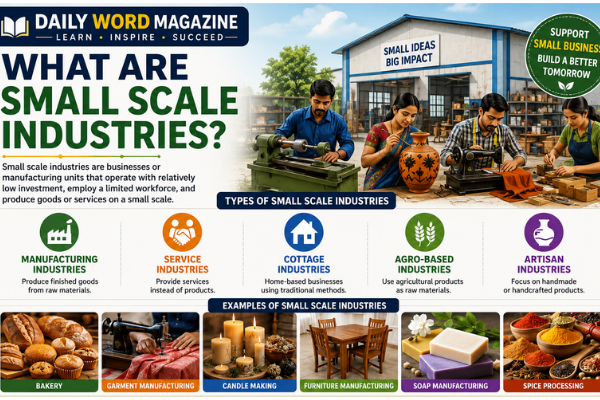
Small Scale Industries (SSIs) are businesses or manufacturing units that operate with a relatively small investment in machinery, equipment, and infrastructure. These industries employ a limited number of workers and produce goods or services on a smaller scale compared to large industries.
Small scale industries are often owned by individuals, families, partnerships, or private companies. They focus on producing quality products while meeting local, national, or international market demand.
These industries are considered the backbone of many developing economies because they generate employment, support local communities, and promote innovation.
Definition of Small Scale Industries
A Small Scale Industry is an industrial enterprise that manufactures products or provides services with limited capital investment, a smaller workforce, and lower production capacity than large-scale industries.
In many countries, governments classify businesses as small-scale industries based on criteria such as:
- Investment in machinery and equipment
- Annual turnover
- Number of employees
- Production capacity
- Business registration category
The exact definition varies from country to country, but the primary concept remains the same: small businesses operating on a manageable scale.
Characteristics of Small Scale Industries
Small scale industries have several unique characteristics that distinguish them from large manufacturing companies.
1. Low Capital Investment
One of the biggest features of small scale industries is that they require relatively low investment. Entrepreneurs can start these businesses without massive financial resources.
2. Limited Workforce
These industries usually employ a small number of workers, making management easier and reducing labor costs.
3. Local Ownership
Most small scale industries are owned and managed by local entrepreneurs or families.
4. Flexible Operations
Small businesses can quickly adapt to market trends, customer demands, and technological changes.
5. Simple Technology
Many small industries use basic or semi-automated machinery instead of highly advanced production systems.
6. Customer-Oriented
Small manufacturers often focus on personalized products and customized services.
7. Regional Development
They are commonly established in rural and semi-urban areas, helping reduce migration to large cities.
Types of Small Scale Industries
Small scale industries can be classified into different categories based on their activities.
1. Manufacturing Industries
These industries manufacture finished goods from raw materials.
Examples include:
- Furniture manufacturing
- Plastic products
- Garment production
- Food processing
- Paper products
2. Service Industries
These businesses provide services instead of manufacturing products.
Examples include:
- Repair workshops
- Printing services
- IT support
- Graphic design
- Photography studios
3. Cottage Industries
Cottage industries are usually home-based businesses managed by families using traditional methods.
Examples include:
- Handloom weaving
- Pottery
- Candle making
- Handmade jewelry
- Basket weaving
4. Agro-Based Industries
These industries use agricultural products as raw materials.
Examples include:
- Rice mills
- Flour mills
- Dairy processing
- Honey production
- Fruit processing
5. Artisan Industries
Artisan industries focus on handcrafted products.
Examples include:
- Wood carving
- Leather products
- Handmade carpets
- Metal crafts
- Ceramic products
Importance of Small Scale Industries
Small scale industries contribute significantly to national development.
Employment Generation
These industries create millions of jobs, especially in rural and underdeveloped regions.
Economic Growth
Small businesses contribute to GDP by producing goods and services while generating income for workers and entrepreneurs.
Entrepreneurship Development
They encourage individuals to start their own businesses with relatively low investment.
Rural Development
Many small industries are located in villages and small towns, helping improve local economies.
Export Promotion
Handicrafts, textiles, processed foods, and engineering products from small industries are exported worldwide.
Balanced Regional Development
Small industries reduce economic inequality by promoting industrial growth outside major cities.
Advantages of Small Scale Industries
There are numerous advantages to establishing a small-scale industry.
Easy to Start
Most small businesses require limited capital and fewer legal formalities.
Lower Investment
Entrepreneurs can begin operations with modest financial resources.
Job Creation
Small industries create employment for skilled and unskilled workers.
Flexibility
Owners can quickly respond to customer needs and changing market trends.
Better Customer Relationships
Direct communication with customers helps improve product quality and satisfaction.
Encourages Innovation
Small businesses often introduce creative products and niche solutions.
Utilization of Local Resources
Many industries use locally available raw materials and labor, reducing production costs.
Disadvantages of Small Scale Industries
Despite their benefits, small industries also face several challenges.
Limited Capital
Access to finance remains a major obstacle for many entrepreneurs.
Outdated Technology
Some businesses cannot afford modern machinery.
Marketing Challenges
Competing with large companies requires significant marketing investment.
Limited Production Capacity
Small industries cannot always meet large customer orders.
Skilled Labor Shortage
Finding experienced workers may be difficult.
Competition
Large manufacturers often dominate the market with lower prices and mass production.
Examples of Small Scale Industries
Here are some common examples of successful small scale industries.
Bakery Business
Produces bread, cakes, biscuits, and pastries for local markets.
Garment Manufacturing
Manufactures clothing, uniforms, and fashion apparel.
Candle Making
A profitable home-based manufacturing business.
Furniture Manufacturing
Produces wooden tables, chairs, cabinets, and office furniture.
Soap Manufacturing
Creates handmade or commercial soaps for local and online sales.
Paper Bag Manufacturing
Produces eco-friendly paper bags as an alternative to plastic bags.
Spice Processing
Processes and packages spices for supermarkets and wholesalers.
Dairy Products
Produces milk, yogurt, cheese, butter, and other dairy products.
Handicrafts
Creates handmade decorative products for domestic and export markets.
Organic Food Processing
Produces healthy food items such as jams, pickles, sauces, and dried fruits.
How to Start a Small Scale Industry
Starting a small scale industry involves careful planning and execution.
Step 1: Choose a Business Idea
Select a product or service that has strong market demand and matches your skills.
Step 2: Conduct Market Research
Understand customer needs, competitors, pricing, and industry trends.
Step 3: Prepare a Business Plan
Outline your goals, budget, marketing strategy, production process, and financial projections.
Step 4: Arrange Capital
Secure funding through personal savings, loans, investors, or government support programs.
Step 5: Register Your Business
Complete the necessary legal registrations and obtain required licenses.
Step 6: Purchase Equipment
Invest in machinery, tools, and raw materials needed for production.
Step 7: Hire Employees
Recruit skilled workers if necessary.
Step 8: Promote Your Business
Use digital marketing, social media, local advertising, and word-of-mouth to attract customers.
Government Support for Small Scale Industries
Many governments encourage the growth of small businesses through:
- Financial assistance
- Low-interest loans
- Entrepreneurship training
- Export promotion schemes
- Tax incentives
- Skill development programs
- Technology support
- Startup incubation centers
These initiatives help entrepreneurs establish and expand their businesses more effectively.
Future of Small Scale Industries
The future of small scale industries is promising due to advancements in technology and digital commerce. Online marketplaces, social media platforms, and e-commerce websites allow small businesses to reach customers worldwide.
Growing demand for eco-friendly products, handmade goods, organic foods, and customized items creates new opportunities for entrepreneurs. Businesses that adopt digital tools, improve product quality, and focus on customer satisfaction are well-positioned for long-term success.
Frequently Asked Questions (FAQs)
What are small scale industries?
Small scale industries are businesses that manufacture products or provide services with limited investment, a smaller workforce, and lower production capacity than large industries.
What are examples of small scale industries?
Examples include bakeries, furniture manufacturing, candle making, garment production, soap manufacturing, paper bag manufacturing, handicrafts, spice processing, and dairy businesses.
Why are small scale industries important?
They create employment, support economic growth, encourage entrepreneurship, promote exports, and contribute to rural and regional development.
What are the main types of small scale industries?
The major types include manufacturing industries, service industries, cottage industries, agro-based industries, and artisan industries.
What are the benefits of starting a small scale industry?
Benefits include low investment requirements, flexible operations, job creation, better customer relationships, innovation opportunities, and the ability to use local resources efficiently.
Conclusion
Small Scale Industries are an essential part of every economy. They provide employment, encourage entrepreneurship, support rural development, and contribute significantly to industrial production and exports. With relatively low investment and growing access to digital technologies, starting a small scale industry has become more accessible than ever.
Whether you plan to launch a manufacturing unit, a service-based business, or a home-based enterprise, understanding the fundamentals of small scale industries can help you build a sustainable and profitable venture. By focusing on quality, innovation, and customer satisfaction, small businesses can compete effectively in today’s dynamic marketplace and contribute to long-term economic growth.













Post Comment