Magazine Table of Contents: Parts, Structure, Elements, Cover Components, Sections & Annotations
Magazine Table of Contents
The Magazine Table of Contents is a page near the front of a magazine. It helps readers find articles and features quickly. It lists the titles of stories, the names of authors (in some magazines), and the page numbers where each article begins. The table of contents is often clear and well organized. It helps readers navigate the magazine easily. It provides a preview of what is included in the issue and helps readers choose the topics they want to read first. A well-designed table of contents improves the reader’s experience and makes the magazine more organized and user-friendly.
Contents Page in a Magazine
The contents page is one of the first pages inside a magazine and serves as a guide for readers. It lists all main articles, features, and regular sections with page numbers. This makes it easy to find specific content.
Many content pages also include brief descriptions or images to highlight important stories and attract readers’ attention.
A clear contents page helps readers find sections quickly and shows what the issue offers.
Contents in a Magazine
The contents in a magazine include all the information and features presented throughout the publication. These typically consist of news articles, feature stories, interviews, editorials, advertisements, photographs, reviews, puzzles, and regular columns. The contents page lists these sections with their page numbers, allowing readers to find topics of interest quickly. The variety of content helps make the magazine informative, engaging, and enjoyable for different audiences.
Parts of a Magazine Cover
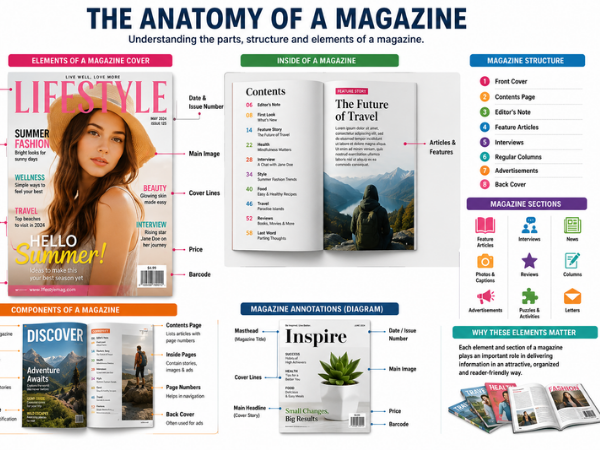
The magazine cover is designed to attract readers and provide key information about the issue. Its main parts include the masthead (the magazine’s title), the main cover image, the main headline, cover lines that highlight important articles, the date, issue number, price, barcode, website, and tagline or slogan. Together, these elements create an eye-catching cover that encourages people to read or purchase the magazine.
Parts of a Magazine
A magazine is made up of several important sections that work together to provide information and entertainment. These parts include the front cover, contents page, editor’s note, feature articles, interviews, news section, advertisements, photographs, regular columns, reviews, and the back cover. Each section has a specific purpose, helping readers easily navigate the magazine and enjoy a well-organized reading experience.
Magazine Elements
Magazine elements are the features that make a magazine informative, attractive, and easy to read. These elements include the magazine cover, masthead, headlines, table of contents, feature articles, photographs, captions, advertisements, page numbers, and back cover. Each element has a specific purpose and helps organize the magazine while keeping readers interested.
Magazine Structure
The magazine structure refers to the way a magazine is organized from beginning to end. It usually starts with the front cover, followed by the contents page, editor’s note, feature articles, interviews, regular columns, advertisements, and the back cover. A clear structure helps readers navigate the magazine easily and creates a smooth reading experience.
Elements of a Magazine Cover
The elements of a magazine cover are designed to attract readers and provide important information about the issue. These elements include the masthead (magazine title), main image, main headline, cover lines, date, issue number, price, barcode, website, and tagline. Together, these features create an appealing and informative cover.
Components of a Magazine Cover
The components of a magazine cover are the visual and text-based parts that make the cover attractive and informative. The main components include the masthead, cover photograph or illustration, main cover story, supporting headlines, barcode, price, publication date, issue number, and publisher’s logo. These components help identify the magazine and encourage readers to purchase or read it.
Inside of a Magazine
The inside of a magazine contains the main content that informs, entertains, or educates readers. It usually includes the contents page, editor’s note, feature articles, interviews, news stories, advertisements, photographs, reviews, puzzles, and regular columns. These sections are arranged in a logical order to provide an enjoyable reading experience.
Magazine Diagram
A magazine diagram is a labeled illustration that shows the different parts of a magazine. It identifies important features such as the front cover, masthead, main image, headlines, contents page, feature articles, advertisements, page numbers, and back cover. A magazine diagram helps students understand the layout and organization of a magazine.
Magazine Sections
The magazine sections are the different parts that divide the magazine into organized categories. Common sections include the cover, table of contents, editor’s note, feature articles, interviews, news, reviews, advertisements, entertainment pages, and the back cover. These sections make it easier for readers to find the information they are looking for.
Components of a Magazine
The components of a magazine are all the parts that work together to create a complete publication. These include the front cover, contents page, editor’s note, feature articles, photographs, captions, advertisements, page numbers, regular columns, and the back cover. Each component plays an important role in presenting information clearly and attractively.
Magazine Annotations
Magazine annotations are labels used to identify and explain the different parts of a magazine or its cover. Common annotations include the masthead, main image, main headline, cover lines, barcode, price, issue number, date, contents page, and page numbers. These labels help readers and students understand the purpose of each part of the magazine.
Conclusion
A magazine is a well-organized publication made up of many important parts that work together to inform, educate, and entertain readers. From the attractive cover and table of contents to the feature articles, photographs, and advertisements, each section has a specific purpose. Understanding the structure, elements, and components of a magazine helps readers navigate its content more easily and appreciate how magazines are designed to communicate information in an engaging and effective way.
Frequently Asked Questions (FAQs)
Q1. What is a magazine?
A magazine is a printed or digital publication that contains articles, photographs, advertisements, and other information on different topics.
Q2. What is the purpose of a magazine cover?
The magazine cover attracts readers and highlights the main stories and features inside the magazine.
Q3. What is a table of contents in a magazine?
The table of contents lists the articles and sections of the magazine along with their page numbers, helping readers find information quickly.
Q4. What are the main parts of a magazine cover?
The main parts include the masthead, main image, headline, cover lines, date, issue number, price, and barcode.
Q5. What is found inside a magazine?
Inside a magazine, you can find feature articles, interviews, editor’s notes, advertisements, photographs, reviews, and regular columns.
Q6. Why are magazine elements important?
Magazine elements help organize information, improve the design, and make the magazine easy and enjoyable to read.
Q7. What is the difference between a magazine cover and the contents page?
The cover attracts readers with images and headlines, while the contents page lists all the articles and their page numbers.
Q8. What are magazine annotations?
Magazine annotations are labels that identify and explain the different parts of a magazine, such as the masthead, headlines, and barcode.








Post Comment